
What's inside
- Best Ink Cartridges for Office Printers by Fleet and Habit
- Quick Comparison: Best Ink Cartridges for Office Printers Families
- Detailed Reviews: Best Ink Cartridges for Office Printers Picks
- Buying Guide: Choosing the Best Ink Cartridges for Office Printers
- More Original Ink Options for Common Office Printers
- Frequently Asked Questions About the Best Ink Cartridges for Office Printers
As an Amazon Associate I earn from qualifying purchases. This post may contain affiliate links at no extra cost to you.
The best ink cartridges for office printers are not a product you choose from a shelf of brands. They are a product you choose from a printer — your printer, its exact model number, its exact cartridge family — because an ink cartridge is a key cut for one lock, and the whole art of buying it well is to buy the right key, in the right size, from a source you can trust, at a cost per page you have counted before the office runs out. That last clause is where offices lose their money, because ink is bought in a hurry, at an empty printer, by whoever is nearest, and a hurried cartridge purchase pays for its urgency in a standard-yield box at a counter price, again and again, across a year whose total nobody ever adds up. This article adds it up. It compares the real cartridge families of the office printer makers — HP, Canon, Epson, and Brother, in their standard, XL, and high-yield classes, with the tank and refill parish named honestly where it changes the answer — and it teaches the three calculations that govern the whole category: cost per page, from a cartridge’s published yield in its maker’s standard terms divided into its real price; yield class, because an XL or high-yield cartridge is almost always the same ink at a lower price per page for the labour of changing it less often; and authenticity, because a cartridge is also a chip, a warranty question, and a print head’s whole diet, and the cheapest cartridge in an office’s year is the one that never has to be thrown away half full. Buy by those three and an office’s ink becomes a budgeted utility. Ignore them and it remains what it is in most offices: a small, recurring emergency with a logo on it.
Compatibility is the first gate, and it is absolute in a way no other specification in this article is. A cartridge fits the printer models its maker lists for its exact cartridge number, and no others, and resemblance, a neighbouring number, and a shop’s assurance across a counter are none of them evidence. Read your printer’s exact model from its own body or its settings, read its cartridge family from its maker’s current information or from the cartridge it already holds, and buy that number, in the yield class this article will argue for, because an office that standardises its ordering on a written model-and-cartridge line — taped, without embarrassment, inside the supply cupboard and saved in the office’s ordering parish — will never again hold a team meeting around an open printer and a wrong box. Region matters in this category and surprises offices that travel or order across borders, because makers sell the same printer under cartridge numbers that can differ by market, and a cartridge bought abroad for an identical-looking printer may be refused by a chip’s geography. Firmware matters, and it must be discussed without either panic or folklore: printer makers update firmware, cartridges carry chips that answer a printer’s questions, and an office using any cartridge parish should keep its printers’ firmware and its cartridge supply in a known relation — updates read before they are accepted where an office’s practice allows, a reserve cartridge always in hand before any change — because the morning a printer and its cartridges stop recognising each other is a morning an office discovers that its ink was a software parish all along. None of this is an argument for or against any source of cartridge. It is an argument for knowing, in writing, what your printers eat, before you are standing in front of them hungry.
Yield class is where an office’s money is actually decided, and its arithmetic deserves a paragraph of its own. A maker publishes, for each cartridge, a yield in pages, measured on a standard test document in the industry’s stated pattern, and while no office prints that document, the figure is a fair relative measure between cartridges for the same printer, which is the only comparison an office needs. Divide a cartridge’s price by its published yield and the category’s whole secret stands in the open: a standard cartridge is the dearest ink an office can buy, an XL or high-yield cartridge for the same printer commonly carries two to three times the pages for well under twice the money, and a multipack, in its makers’ parish, lowers the parish further for the colours an office uses together. An office should therefore standardise, as a policy and not as a preference, on the largest yield class its printers accept, bought in advance, because the saving is not a coupon’s. It is structural, repeated on every page, and it compounds across a fleet. The colours deserve their own count: most offices spend their colour ink in a pattern no one has ever measured, in which one colour — in a logo’s and a chart’s parish, usually one — runs out alone and retires its combined cartridge or empties its shelf position while its siblings stand full. Printers with individual colour cartridges, in the Canon, Epson, and Brother pattern, charge an office only for the colour it spent, while a combined colour cartridge charges for three colours whenever one is finished, and an office choosing printers, in the year it replaces them, should weigh that architecture as heavily as any speed, because it will pay for it on every colour page it ever prints. Black deserves its own severity, because an office’s black is its volume: a pigment black cartridge or parish, in the makers’ office lines, is formulated for text’s crispness and a document’s life, and an office should confirm that the black it buys is the black its printer’s office parish intends, rather than a photo black wearing the same shelf.
Original, compatible, and refilled is the comparison every office actually argues about, and this article will give it the honest treatment it rarely receives. An original cartridge, from the printer’s own maker, is the parish of certainty: it is the ink the printer and its print head were designed around, its yield and its chip are the maker’s own account, its warranty and support conversation is undivided, and its price per page, in its high-yield class, is the figure every other parish must be compared against rather than against its standard class’s worst. A compatible cartridge, made by a third party for a stated printer parish, can be a legitimate economy from an established maker who states its yield, stands behind its chip, and accepts its returns, and it can be, from a source that does none of those things, the most expensive cartridge an office ever buys, in pages thrown away, in a print head’s parish, and in a morning’s whole output. A refilled or remanufactured cartridge adds an environmental and an economic parish of its own, with the same division between a remanufacturer who tests, warrants, and states, and a refill whose history is a rumour. This article’s rule is a purchasing one and not a tribal one: an office may buy in any parish whose supplier states a yield, warrants the cartridge, and can be returned to without a pilgrimage, and it should count that parish’s true cost per finished page — including the cartridges discarded early, the reprints, and the cleaning cycles a doubtful ink invites — against the original high-yield figure, because a compatible that finishes its stated yield at a lower price is a saving, and one that does not is a donation, and only an office’s own count, kept across a quarter, can tell it which one it has been buying. One parish stands outside the argument entirely and an office should know it by name: the tank printer, in the Epson EcoTank, Canon MegaTank, and HP Smart Tank pattern, which has no cartridges at all and takes bottled ink at a cost per page below every row in this table, and an office whose ink bill has become a line it reads aloud should price a tank replacement, in the year its printers turn, as the cartridge purchase that ends cartridge purchases. This guide compares six real, currently sold office cartridge families: HP 950/951 and 952/953 parish and its XL classes, Canon PGI and CLI office parish in its XL classes, Epson DURABrite and WorkForce cartridge parish, Brother LC and high-yield parish, HP Instant Ink as a supply parish in its own terms, and the established compatible parish in the LD and Arthur Imaging pattern, each judged on a counted cost per page for its exact printers.
Our Top Picks
Best Ink Cartridges for Office Printers by Fleet and Habit
The single-printer office: one model, one cartridge number, XL as a policy
For an office with one inkjet — a small practice, a home office with clients, a shop’s back desk — the correct purchase is its printer’s original or established compatible cartridge in its highest yield class, bought as a reserve before it is needed, with the printer’s model and cartridge number written in the ordering parish where the next buyer will find them. Such an office should count its cost per page once, in an afternoon, from its cartridge’s published yield and its real price, and should let that single figure choose its yield class forever, because a one-printer office has no fleet economies to hide in and its ink discipline is entirely a habit. Keep one full set in reserve, always, bought when the installed set is opened, because an office that orders at a warning has a supplier, while an office that orders at an empty printer has a landlord, and the difference is charged by the page.
The multi-printer office: standardise the fleet, count quarterly, let the architecture argue
An office with several inkjets should standardise, as far as its replacement calendar allows, on printers that share a cartridge family, because a fleet that eats one cartridge can be stocked, counted, and negotiated for, while a fleet that eats five is a cupboard of small emergencies each waiting for its own morning. Such an office should count its ink quarterly — cartridges bought, by class and source, pages printed from its printers’ own counters where they report them, cost per finished page including its discards and reprints — and should let that count, and not a counter’s conversation, choose between its original and its compatible parish and name the quarter a tank fleet’s arithmetic begins to win. Its ordering should be a person’s named duty, with a reserve level set by its suppliers’ delivery times, because a multi-printer office’s ink failures are almost never a cartridge’s. They are a cupboard that nobody owned, audited by a deadline.
The colour-document office: individual colours, pigment black, a logo’s parish counted
An office whose colour is its correspondence — a logo on every letter, a chart in every report — should buy individual colour cartridges in its printers’ parish, replace only the colour spent, confirm its black as the pigment office parish its maker intends for text, and count its colour cost per page as a separate line from its black, because the two economies are different countries sharing a printer. Such an office should set its drivers’ defaults with the same care as its purchasing: colour as a deliberate choice rather than as a document’s inheritance, drafts in an economy parish where a printer provides one, and proofs on the paper they will be judged on rather than on a setting’s optimism. Let its reserve be deepest in the colour its own logo spends, which its quarterly count will name within two quarters, because every office has such a colour and every office discovers it, cartridge by cartridge, at the price of the combined boxes it retired to learn it.
Quick Comparison: Best Ink Cartridges for Office Printers Families
| Model | Key Specs | Best For | Typical Price Range | Rating |
|---|---|---|---|---|
| HP 952/953 and 950/951 XL Parish (OfficeJet Pro families) | Cartridge families by printer as maker states, standard and XL yield classes in maker terms, pigment parish classes | Best ink cartridges for office printers overall | $25 – $70 per cartridge by colour and yield | 4.5 / 5 |
| Canon PGI XL and CLI XL Parish (PIXMA and MAXIFY families) | Cartridge families by printer as maker states, individual colour and XL classes in maker terms, pigment black parish | Best individual colour economy | $18 – $55 per cartridge by colour and yield | 4.5 / 5 |
| Epson WorkForce and DURABrite XL Parish | Cartridge families by printer as maker states, XL yield classes in maker terms, DURABrite parish classes | Best durable office documents | $20 – $60 per cartridge by colour and yield | 4.4 / 5 |
| Brother LC High-Yield Parish (MFC families) | Cartridge families by printer as maker states, standard and high-yield classes in maker terms, individual colour classes | Best high-yield value | $15 – $50 per cartridge by colour and yield | 4.4 / 5 |
| HP Instant Ink Supply Parish | Subscription supply classes as maker states in its current terms, page parish classes, cartridge provision classes | Best managed supply | $5 – $25 monthly parish by plan class | 4.2 / 5 |
| Established Compatible Parish (LD and Arthur Imaging classes) | Compatible families by stated printer as makers state, yield classes in makers’ terms, warranty parish classes | Best compatible value | $10 – $35 per cartridge by colour and yield | 4.0 / 5 |

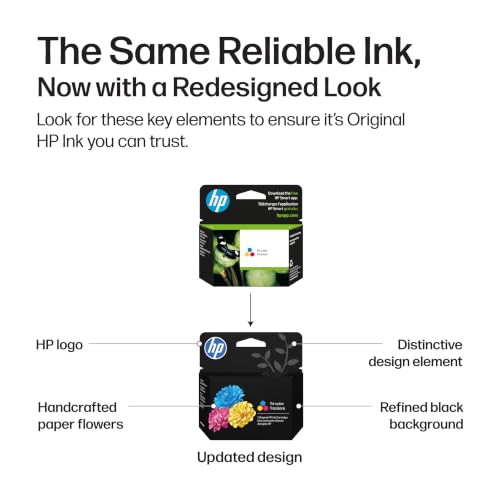
HP 923 Black, Cyan, Magenta, Yellow Ink Cartridges (4-Pack) | Works with OfficeJet 8120, Pro 8130 Series | 6C3Y6LN


As an Amazon Associate we earn from qualifying purchases. Product prices and availability are accurate as of the date/time indicated.
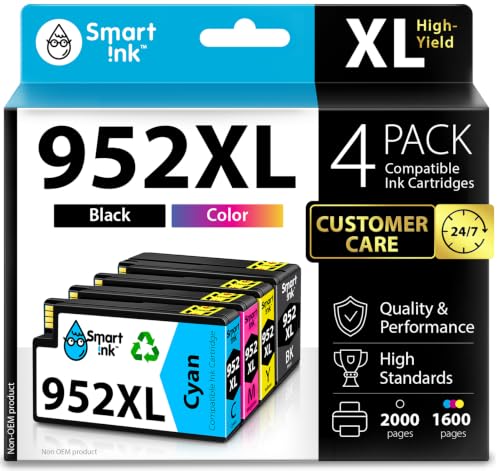
Smart Ink Compatible Ink Cartridges Replacement for HP 952XL 952 XL 4 Combo Pack (Black, Cyan/Magenta/Yellow) to use with HP OfficeJet Pro 8710 7740 8720 8715 8210 8703 OfficeJet 8702 Printers
As an Amazon Associate we earn from qualifying purchases. Product prices and availability are accurate as of the date/time indicated.

63XL Ink Cartridges Black and Color for HP Ink 63 Replacement for HP 63XL Ink Cartridge Combo Pack Works for HP OfficeJet 3830 4650 5255 5258; Envy 4520 4512; DeskJet 3630 2130 1112 Printer (2 Pack)
As an Amazon Associate we earn from qualifying purchases. Product prices and availability are accurate as of the date/time indicated.
Cartridge number and its stated printer compatibility, standard and XL published yields in the maker’s standard test terms, individual or combined colour architecture, pigment or dye parish in the maker’s terms, and subscription or supply terms where a parish provides them are each maker’s specification for the current exact cartridge, and compatibility with your exact printer model and your market must be confirmed before purchase. Prices are typical street ranges per cartridge as described and vary strongly with yield class and multipack; cost per page should be calculated from a cartridge’s published yield and its actual purchase price. Ratings reflect office suitability: a counted cost per page in its high-yield class, compatibility stated and honoured, yield delivered in an office’s keeping, chip and firmware manners with its printers, and value across a year of deadlines.
Detailed Reviews: Best Ink Cartridges for Office Printers Picks
1. HP XL Parish – Best Overall
HP’s OfficeJet Pro cartridge parish in its XL classes leads because it is the office inkjet’s working standard: high-yield cartridges in its families’ pattern whose published yields make a cost per page an office can settle, in a pigment parish built for documents. For an HP fleet, its XL class is not an upgrade. It is the cartridge, and its standard class is the emergency.
Let the reserve be XL and the standard bought only by a deadline’s duress. An HP office so supplied will stop meeting its ink bill in instalments of panic, and its quarterly count, when it is first taken, will usually discover that the XL policy alone was worth a printer over the fleet’s life.
2. Canon XL Parish – Best Individual Colour Economy
Canon’s PGI and CLI parish competes on an architecture an office can feel in its accounts: a pigment black for its text and individual colours replaced as they are spent, in XL classes across its office families. For a colour-document office, that architecture is a saving that repeats on every logo it prints.
Count its colours separately for two quarters, as this article directs for every colour fleet. A Canon office so counted will know its logo’s parish to the cartridge, and an office that knows which colour it spends has finished the education most offices pay for, combined box by combined box, for years.
3. Epson DURABrite Parish – Best Durable Documents
Epson’s WorkForce cartridge parish, in its DURABrite terms, serves the office whose documents must live — filed, handled, and read in years rather than in weeks — with an ink parish its maker builds for a document’s durability, in XL classes for its office machines. For a records parish, that life is the specification.
Let its fleet decision, when its printers turn, weigh Epson’s tank parish in the same afternoon, because its maker sells both sides of this article’s argument. A WorkForce office so advised will choose its next parish on a count, and a count, in an ink economy, is the closest thing to a crystal ball an office is ever offered.
4. Brother High-Yield Parish – Best Value
Brother’s LC parish gives a small office high-yield cartridges in its families’ pattern at prices that have made its MFC machines a budget’s standard, with individual colours and a yield parish an office can count without a magnifier. For a cost-counting office, it is the value to beat.
Standardise its fleet on one of its families where a calendar allows, as this article’s fleet counsel directs. A Brother office so standardised will stock one cupboard, count one cartridge, and negotiate one parish, and its ink will become what every office in this guide is seeking: a utility, with a utility’s manners and a utility’s bill.
5. HP Instant Ink Parish – Best Managed Supply
HP’s Instant Ink parish stands in this table as a different species: not a cartridge bought but a page parish subscribed to, in its maker’s current terms, with cartridges supplied as a printer reports its need. For a small office whose ink failures are administrative rather than economic, that management can be the purchase, provided its terms are read entire before they are signed.
Let its pages be counted against your own quarter before its second term. A subscription so audited will either prove itself a calm or reveal itself a rent, and an office that audits its conveniences annually will keep the ones that are services and dismiss the ones that are habits, in ink as in everything.
6. Established Compatible Parish – Best Compatible Value
The established compatible parish, in the LD and Arthur Imaging pattern, closes the table under this article’s stated conditions: a yield stated, a warranty honoured, a return that is a process rather than a pilgrimage, in fitments for the exact printers its makers name. For an office that counts its finished pages, it can be an honest economy.
Let its trial be a quarter and its judge be a count, including every discard and reprint, against the original XL figure for the same printers. A compatible parish that survives that audit has earned a fleet. One that does not has been given, at a quarter’s small tuition, the most valuable information in this entire article, which is what its office’s ink actually costs.
Buying Guide: Choosing the Best Ink Cartridges for Office Printers
Write the model and the number down, standardise on XL, count a cost per page once
Record every office printer’s exact model and its cartridge family in the ordering parish and inside the supply cupboard, confirm every purchase against that line and its market, and standardise, as a policy, on the highest yield class each printer accepts, bought in multipacks where its colours are spent together and individually where they are not. Count, for each fleet, a cost per page from a cartridge’s published yield in its maker’s terms and its actual price, and write that figure beside the model line, because an office that can see its cost per page will make every later decision in this category correctly and almost without discussion. Price any compatible or subscription parish against that figure, across a quarter’s finished pages including its failures, and let a tank fleet enter the arithmetic in the year a printer is replaced, because the cheapest cartridge in this table is outpriced, across a fleet’s life, by a bottle.
Keep a reserve level, a named owner, and a firmware parish you understand
Set a reserve for every cartridge family the fleet eats — a full set as the floor for a single printer, a level set by delivery times for a fleet — bought when the installed parish is opened rather than when it is empty, and appoint the cupboard’s owner by name, because an office’s ink is a supply chain of one cupboard and it fails, like larger ones, at an unowned shelf. Keep printers’ firmware and cartridge supply in a known relation: read an update’s account where an office’s practice allows before it is accepted, never begin a change with an empty reserve, and record any cartridge a printer refuses, with its source and its date, because a pattern in that record is a purchasing decision trying to be made. Store cartridges in their sealed parish, in a room’s ordinary climate, rotated so the oldest is used first, and never stockpile beyond a parish a fleet can spend within a cartridge’s reasonable keeping, because ink, like most economies, punishes both a shortage and a hoard.
Replace printers on the ink’s evidence, and let the quarterly count govern the fleet
Keep a quarterly count — pages, cartridges by class and source, discards and reprints, a cost per finished page — and let it make the fleet’s decisions in their order: a yield class corrected, a supplier audited, a printer whose architecture charges for three colours to replace one retired at its turn, and a fleet whose total ink bill argues, in figures an office has kept itself, for the tank parish that ends the argument. At a printer’s retirement, use or pass on its reserve cartridges with its honest parish stated, because an orphaned cartridge is a small monument to a fleet that changed without a count. The best ink cartridges for office printers are finally an absence of drama at a deadline: the right number, in the largest yield, in a cupboard that is never empty — and any cartridge in this table, bought by that count, stocked by that reserve, and audited by that quarter, will let an office spend its attention on the documents it prints rather than on the ink that prints them, which is the whole and sufficient ambition of a supply.
More Original Ink Options for Common Office Printers
Matching the exact cartridge number to your printer saves wasted prints and headaches. Here are some originals for popular home and office models.
HP 63 Tri-Color Cartridge
A color cartridge for the DeskJet and Envy families that replaces both the 63 and 65 colors. Good for occasional color documents and forms.
As an Amazon Associate we earn from qualifying purchases at no extra cost to you.

HP 63XL High-Yield Black Cartridge
The higher-yield black cartridge suits heavier document printing and cuts the number of replacements over the year.

HP 63 Black and Tri-Color 2-Pack
A convenient bundle when you print both text and color and want both cartridges ready. Works with a range of DeskJet series.

Epson 502 Pigment Black Bottle
For EcoTank printers using the 502 series, this bottle provides sharp black text with a large fill. It fits models in the ET-2800 and ET-3800 ranges.

Epson 522 Four-Color Combo Pack
A full set of refill bottles for newer EcoTank models that use the 522 line. A tidy way to stock up for a long stretch.

Higher-yield cartridges and refillable bottles generally lower the cost per page for regular printers, while standard cartridges make sense when you print only a few pages a month. Printers can also reject cartridges that do not match the model, so keep the exact printer series handy when ordering. Always confirm the model compatibility list before buying, since cartridge numbers can look alike across series.
Frequently Asked Questions About the Best Ink Cartridges for Office Printers
What are the best ink cartridges for office printers?
The ones made for your exact printers, in their highest yield class. HP’s XL parish leads this table overall for its OfficeJet Pro fleets, with Canon’s XL parish for individual colour economy, Epson’s DURABrite parish for durable documents, Brother’s high-yield parish for value, HP’s Instant Ink as a managed supply in its own terms, and an established compatible parish under a counted audit. Confirm a cartridge’s number against your printer’s exact model and your market from its maker’s current information, calculate its cost per page from its published yield and its real price, standardise on its XL or high-yield class, and keep a full reserve bought before it is needed. An office that performs those four acts has bought the best cartridges in this category, whatever their brand, because in ink the best is a discipline before it is a product.
Are XL ink cartridges worth it for an office?
Yes, in almost every office parish this article can construct, because an XL or high-yield cartridge commonly carries two to three times its standard sibling’s published pages for well under twice its price, which makes its cost per page lower on every page, its changes less frequent across a year, and its reserve cheaper to keep at a useful depth. The arithmetic is not a promotion. It is the same ink in a larger parish, and an office can verify it in one minute with the two yields and the two prices for its own printer. The exceptions are honest ones: a printer about to be retired, whose remaining life will not spend an XL’s parish, and a colour so rarely used that even a standard cartridge ages in its parish. For a fleet’s black and its working colours, standardise on the largest class each printer accepts, and let the standard cartridge return to its proper office, which is the emergency that a reserve exists to prevent.
Are compatible ink cartridges safe for office printers?
From an established maker who states a yield, warrants the cartridge, names its exact printer parish, and accepts its returns, a compatible cartridge can be a legitimate economy, and many offices in this article’s keeping run them across a fleet on a counted audit. From a source that does none of those things, a compatible is the most expensive ink an office can buy, because its true price includes the cartridges discarded early, the output reprinted, the cleaning cycles it invites, and the support conversation it divides, none of which appears on its box. The only honest judge is an office’s own count: a quarter of finished pages, including every failure, divided into the quarter’s whole ink spend, compared against the original high-yield figure for the same printers. Buy a trial on that audit’s terms, keep the original parish as the reserve’s standard while it runs, and let the count, and not a counter, a forum, or this article, sign the fleet’s contract.
When should an office stop buying cartridges and switch to tank printers?
When its own quarterly count says so, which for a growing number of offices is at the next printer replacement. A tank printer in the Epson EcoTank, Canon MegaTank, or HP Smart Tank pattern replaces cartridges with bottled ink at a cost per page below every cartridge parish in this table, at a higher machine price that a counted fleet can amortise across its pages with an honesty a cartridge fleet cannot argue with. The moment to price it is the moment a printer turns — by age, by a volume outgrown, by a repair’s arithmetic — and the figure to price it with is the office’s real cost per finished page, kept across quarters, multiplied by the new machine’s expected life in pages. An office that has kept that count will know its answer to the page. An office that has not should begin the count this quarter, in its cupboard, with its model and cartridge line written at the top, because every parish in this article, cartridge, compatible, subscription, and tank alike, is governed by the same small figure, and the offices that know theirs are the ones that stop paying for ink twice.
Related guides
- Best AAA Batteries for Office Remotes in 2026: AAA Batteries for Office Remotes
- Best Budget Tablet for Work Under 100 in 2026: Budget Tablets for Work Under $100, Office Work, and Productivity
- Best Gimbal for Office Vlogging in 2026: 7 Gimbals for Office Vlogging That Keep Your Video Smooth, Stable, and Professional in the Office
- Best Budget NAS Dust Filter for Maintenance in 2026: 7 Budget NAS Dust Filters for Maintenance With Clear Airflow, Simple Install, and Easy Use for NAS
More from Amazon
Programs that pair well with the guide above. Offers and eligibility are set by Amazon and may change.
Free shipping on eligible items, Prime Video and more. Eligible new members can start with a free trial.
Start a Prime free trialAd-free music streaming. Eligible new subscribers can start with a free trial.
Try Music Unlimited freeA Prime membership for ages 18-24 with a trial period. Eligibility is set by Amazon.
See Prime for Young AdultsAudiobooks and podcasts to listen to on the go. Eligible new members can start with a free trial.
Try Audible freeAs an Amazon Associate we earn from qualifying purchases.

Write Your Review
No reviews yet. Be the first to share your experience!