
What's inside
- How to Choose Tripod for Office Travel: The Decisions
- Quick Comparison: Travel Tripods for the Office Traveller Compared
- The Six Tripods Reviewed as Worked Examples
- Buying Guide: How to Choose Your Office Travel Tripod, Step by Step
- How We Selected These Tripods for Office Travel
- Frequently Asked Questions About Choosing a Tripod for Office Travel
As an Amazon Associate I earn from qualifying purchases. This post may contain affiliate links at no extra cost to you.
How to choose tripod for office travel is a different question from the photographer’s, because the travelling professional’s tripod does a stranger job: it is office equipment that flies. In the hotel room it holds the camera at eye level for the keynote recorded at midnight; in the client’s boardroom it is the product shoot’s silent partner; in the trade-show booth it carries the demo camera for eight hours; and in between it must vanish into a carry-on, survive the baggage system when it cannot, and set up in ninety seconds without a manual, a swear word, or a wobble that a client can see. This guide teaches the choosing for that parish — the specifications that matter when the tripod’s home is a suitcase and its workplace is wherever the quarter ends — with six real tripods compared as worked examples, from the premium carbon designs that have become the travelling professional’s standard to the honest budget sticks that serve the occasional trip. Read the decisions in order, because the office traveller’s classic mistakes are ordering mistakes: the tripod bought for its maximum height that will not fit the bag, the ball head bought for a camera it cannot hold level, the bargain legs whose packed length exiles them to checked luggage and the baggage carousel’s mercy.
Define the office traveller’s actual work before any specification, because the tripod is bought for tasks and not for a hobby’s romance. The tasks, in the order most travelling professionals meet them: video first — the recorded talk, the interview, the webinar from the hotel desk — which wants a head that levels in seconds and holds a camera or a phone at seated eye height without creeping; stills second — the product photograph, the site documentation, the team’s portrait against the office’s one good wall — which wants a working height at standing eye level and a plate system that swaps in the dark; and the hybrid modern tasks, the trade-show stream and the training recording, which want endurance and a footprint that fits between the booth’s furniture. The camera in these tasks is as often a phone or a mirrorless body with a modest lens as it is a full professional rig, which reorders the tripod market’s values completely: the expedition tripod’s load heroics are wasted here, and the winners are the designs that pack smallest, set up fastest, and hold a working camera dead level for hours. Every tripod in this table is graded against that task list, and the buying guide’s worksheet begins by making the reader write their own version of it — because the tripod for the architect’s site visits and the tripod for the consultant’s keynote circuit are cousins, not twins.
The travel constraints are the guide’s second foundation, and they are measured in the unglamorous units of the road. Packed length is the first: the carry-on’s interior, the personal bag’s sleeve, the roll-aboard’s remaining inches after the shoes — the tripod that exceeds them is checked luggage, with the checked luggage’s risks and fees and carousel minutes, and the office traveller’s whole art is not checking bags. Weight is the second, audited against the bag’s total rather than the tripod’s own brochure, because the traveller carries the system — laptop, camera, tripod, and the day’s clothes — through the airport’s geography on one shoulder’s opinion. Airline rules are the third: tripods travel in cabin baggage on most carriers as ordinary equipment, with the sensible courtesies observed — no spiked feet brandished, the tripod stowed as the crew directs — and the traveller checks their own carrier’s current page as they would for any professional kit, because the rules are the carrier’s and they change. Within those constraints, the office tripod is a solved problem at several prices, and the sections below solve it in the open.
Our Top Picks
How to Choose Tripod for Office Travel: The Decisions
Decision One: Packed Length and Weight — the Suitcase Audit
Measure the bag before the tripod, with the tape the bag’s maker wishes you would use: the interior length of the carry-on the tripod will live in, the laptop bag’s sleeve if that is its home, and the diagonal that forgiving bags allow. The office class’s serious designs pack into the region of a large umbrella — the premium carbon leaders have made a religion of it — while the traditional travel tripods run longer and exile themselves to the checked bag or the car’s boot, which for the flying professional is a disqualification and for the driving one is a shrug. Weight is audited as a system: the traveller’s whole shoulder load across the airport, where the difference between the carbon and aluminium versions of the same design — commonly a third of a kilo to a kilo — is either the tripod’s own tax or the camera budget’s salvation, decided by the traveller’s distances rather than by doctrine. Write both numbers — your bag’s inches, your shoulder’s verdict — at the top of the worksheet, because every later decision is made inside them, and a tripod that fails the suitcase audit is not a worse tripod but a different product: somebody else’s.
Decision Two: Working Height and the Level Head
The office tripod works at two heights, and it must be honest at both. Seated eye height — the hotel-desk keynote, the interview, the webinar — is the lower parish, where the tripod stands on the floor beside the desk or, in the tabletop’s smaller parish served by the mini designs, on the desk itself. Standing eye height — the product shot, the portrait, the site documentation — is the upper, and it is audited with the traveller’s own eye as the measure: the tripod whose maximum height reaches the photographer’s chin forces a crouch that an eight-hour booth day converts into a grievance, while the centre column extended to its full, wobbling reach is a height the specification claims and the footage disproves. The head is the height’s partner and the office parish’s deciding component: for video, a head that levels by a ball or a bowl in one motion and pans without a stutter; for stills, a ball head with a friction control that holds the chosen frame without the slow creep that ruins the long exposure and the timelapse alike; for both, a quick-release plate of a standard pattern — the Arca-Swiss parish is the professional’s lingua franca — so the camera mounts the tripod, the slider, and the client’s own rig without an adapter’s archaeology.
Decision Three: Legs, Locks, and the Ninety-Second Setup
The legs are graded by the road’s two tests: speed and silence. Speed, because the office setup happens in borrowed rooms on other people’s clocks — the leg locks, whether the twist class or the flip class, must open and lock by feel, in a sequence the hands learn in one evening, with the sections extending in the order that makes the levelling a single pass rather than a negotiation. Silence and manners, because the tripod works in carpeted, echoing, client-occupied space: rubber feet that grip the boardroom’s floor without marking it — spiked feet are the expedition’s parish and the facilities manager’s enemy — locks that close without a snap, and a folded profile that leans in the corner like furniture rather than sprawling like scaffolding. Stability is the third leg of the decision, stated plainly: the office tripod holds a working camera against the floor’s vibration and the presenter’s gesture, not against a mountain gale, and its sections and joints are bought to that standard — the traveller who also shoots landscapes in storms buys the photographer’s heavier parish knowingly, as a second tripod or a heavier compromise, and not by accident.
Quick Comparison: Travel Tripods for the Office Traveller Compared
| Tripod Model | Class / Best For | Key Specs | Typical Price Range | Rating |
|---|---|---|---|---|
| Peak Design Travel Tripod (Carbon) | Premium — best tripod for office travel overall | Packs to water-bottle diameter class, fast-deploy legs, integrated ball head, phone mount as published | $550 – $650 | 4.8 / 5 |
| Peak Design Travel Tripod (Aluminium) | Premium value — best for most professionals | Same design in aluminium, heavier by a modest margin, same packed profile as published | $350 – $420 | 4.7 / 5 |
| Manfrotto Befree Advanced | Mid — best traditional travel design | Compact folding legs, ball head, broad version range incl. video-head models as published | $180 – $280 | 4.5 / 5 |
| Benro CyanBird | Hybrid — best flat-pack design | Flat-profile legs pack thin, carbon and aluminium versions, video and photo head options as published | $250 – $400 | 4.5 / 5 |
| Gitzo Traveler Series 1 | Premium — best build for heavy use | Carbon legs, the expedition finish at travel size, head sold to choice as published | $500 – $800 (legs) | 4.6 / 5 |
| Ulanzi MT-44 / Extendable class | Budget — best occasional and phone work | Extendable tripod for phones and light cameras, tabletop-to-standing class as published | $30 – $60 | 4.0 / 5 |

Amazon Basics 50-inch Lightweight Portable Camera Tripod Stand with Quick-Release Plate, Adjustable Height, Aluminum, for Travel Photography, Champagne
As an Amazon Associate we earn from qualifying purchases. Product prices and availability are accurate as of the date/time indicated.

Wavmill Misting Stroller Fan, 6000mAh Battery Operated Portable Fan with Light & 360° Pivoting, Personal Fans with Flexible Tripod, Office, Travel,Treadmill,Outdoors
As an Amazon Associate we earn from qualifying purchases. Product prices and availability are accurate as of the date/time indicated.
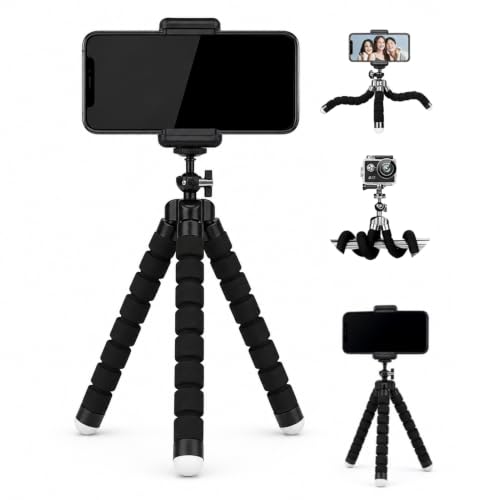
Small Tripod for iPhone, Mini Phone Tripod with Flexible Legs for Selfies | Compact mini phone tripod for iPhone with flexible legs for hands-free calls, selfies, streaming, travel and everyday viewing
As an Amazon Associate we earn from qualifying purchases. Product prices and availability are accurate as of the date/time indicated.
Ratings are editorial assessments for the travelling professional’s tasks, based on the makers’ published packed dimensions, weights, heights, and head designs, and value at typical prices. Prices are typical retail ranges; the Gitzo’s head is an additional purchase, as its row states. Packed lengths and maximum heights vary by version within each line and must be confirmed against the exact model and your own bag’s measurements, as this guide’s suitcase audit requires.
The Six Tripods Reviewed as Worked Examples
1. Peak Design Travel Tripod, Carbon – Best Overall
Peak Design’s tripod is the office traveller’s standard because it was designed from the suitcase outward: legs that fold into the centre column’s own profile until the whole object packs at the diameter of a water bottle, a setup measured in seconds by a hand that has done it twice, an integrated head that levels and locks with a photographer’s authority, and a phone mount hidden in its spine for the task list’s most common camera. The carbon version is the weight’s summit and the price’s. For the professional whose tripod flies weekly and works daily, it is not an extravagance but the category’s answer, and it wears the crown on the audit this guide teaches: it is the tripod most likely to be in the bag, which is where tripods do their work.
2. Peak Design Travel Tripod, Aluminium – Best for Most
The same design in aluminium trades a modest weight margin for a saving that buys the camera’s next lens, and for the traveller whose airports are driven to rather than crossed on foot, the trade is the correct one in most weeks of the year. Every other virtue — the packed profile, the setup, the head — is the flagship’s entire. It is the guide’s expected purchase for the parish: the professional’s design at the pragmatist’s price, graded a breath behind its sibling on the shoulder’s evidence alone.
3. Manfrotto Befree Advanced – Best Traditional
The Befree is the travel tripod as the great Italian house refined it over generations: legs that fold up around the head into a compact bundle, a ball head of genuine quality, versions for the video parish with fluid heads, and a dealer and rental network that means a broken Befree in a strange city is an errand rather than a catastrophe — a professional consideration no specification lists. Its packed length is the traditional class’s, longer than the Peak’s revolution, and its parish is the traveller with the roomier bag and the longer history. It remains the sound, supported middle of the category.
4. Benro CyanBird – Best Flat-Pack
The CyanBird’s idea is the packed shape: legs of a flat profile that fold into a slab rather than a cylinder, sliding into the laptop bag’s geography and the briefcase’s remaining inch where round tripods cannot go. Its versions span photo and video heads and both materials, and its setup is the modern class’s. For the traveller whose bag is a briefcase first and a camera bag second — the consultant’s exact parish — it is the design that fits the life, and its rating honours the insight that the best tripod is the one shaped like the luggage it must join.
5. Gitzo Traveler – Best Build
Gitzo’s Traveler is the legs as heirloom: carbon tubes and machined joints of the expedition standard, folded to travel size, sold without a head so the professional mounts the exact head their tasks demand — the video bowl for the keynote specialist, the great ball for the stills parish. Its price, completed with a head, is the table’s summit, and its service life is the defence: the tripod bought at thirty and retired by somebody else. For the heaviest professional use — the site architect, the production traveller — it is the connoisseur’s foundation, graded on a decade’s arithmetic rather than a season’s.
6. Ulanzi Extendable Class – Best Budget and Phone
The extendable stick-tripods of Ulanzi’s class serve the task list’s lightest parish honestly: the phone keynote from the hotel desk, the occasional product snap, the trip where the camera is a phone and the tripod is an insurance policy rather than a tool of trade. Their heights and stability are their prices’, stated without apology, and their packed size is a coat pocket’s. For the occasional traveller they are the rational purchase — and the guide includes them so the professional who needs more can see, priced and specified, exactly the line they are stepping over and why.
Buying Guide: How to Choose Your Office Travel Tripod, Step by Step
The Worksheet: Tasks, Bag, Camera, Budget
Write the four audits in order, as this guide’s decisions prescribe. Tasks: your real list across a quarter — the keynote recordings, the product sessions, the booth days — with their heights and their hours, because the tripod is bought for the list and not for the trip you dream about. Bag: the interior measurements of the luggage it must live in, taken with a tape, and the total shoulder load of your travel system weighed on the bathroom scale in its travelling form. Camera: the heaviest rig it must hold — body, longest lens, the microphone’s and light’s additions — against the tripod’s and head’s published capacities, with margin for the long lens’s leverage. Budget: the whole system — tripod, head where separate, the phone mount, the spare plate, the bag it may demand — totalled before the order, because the office tripod’s accessories are few and each is a working necessity rather than a catalogue’s suggestion. Four audits, one page, and the shortlist from the table above writes itself in the traveller’s own handwriting.
The Hotel-Room Test: Ninety Seconds, Eye Level, Dead Level
Prove the purchase in its parish within the returns window, by the drill the road will run: from the packed bag, on a timer, to a camera levelled at seated eye height — ninety seconds is the professional standard this guide sets, and the tripod that cannot meet it in your hands, in your room, will not meet it in the client’s. Record a minute of your own talk and watch it as the audience will: the frame’s steadiness, the head’s creep across the minute, the level’s truth against the door frame behind you. Swap the camera for the phone and repeat, because the hybrid task list is the modern reality. Then pack it, weigh the bag, and walk the corridor’s length with it on your shoulder. The tripod that passes the hotel-room test in all four movements is bought; the one that argues is returned while returning is free, with the worksheet’s thanks for the education.
Keep It Travelling: Maintenance for the Road
Maintain the tripod as professional kit, on the road’s own rhythm: the leg locks wiped of the conference centre’s grit before it enters the bag, the joints checked at the season’s turn, the quick-release plate’s screws and the head’s tensions on the same audit as the camera’s own. Keep the spare plate in the camera bag and the hex keys the design wants in the tripod’s own pouch, because the road’s repairs happen in hotel rooms with the tools at hand or not at all. Store it packed in its place in the luggage system, so the trip’s packing list is a memory rather than a search. So kept, the office travel tripod becomes what the best professional tools become: invisible infrastructure — the keynote framed like a studio’s, the product shot lit by a window and steadied like a catalogue’s, the client never once thinking about the three legs in the corner. That invisibility, purchased by the audits in this guide, is the entire return on the investment.
How We Selected These Tripods for Office Travel
We included only real, named, currently sold tripods from established makers, spanning the premium packed-profile designs, the traditional travel class, the flat-pack hybrid, the expedition build, and the honest budget class, graded for the travelling professional’s task list — video at seated height, stills at standing height, carry-on logistics — rather than for expedition photography. Published packed dimensions, weights, heights, and head types were the evidence, and every model is directed to be audited against the reader’s own bag measurements and camera weight before purchase, as the guide’s worksheet requires.
Frequently Asked Questions About Choosing a Tripod for Office Travel
Can I take a tripod in carry-on luggage?
On most airlines, yes — tripods are ordinary cabin baggage when they fit the bag and the bag fits the airline’s dimensions, which is why this guide’s suitcase audit is the purchase’s first step. The courtesies and cautions are few and practical: the tripod rides inside the bag rather than brandished as a personal item with opinions; spiked feet, where a design offers them, are swapped for the rubber the boardroom wants anyway; and the traveller checks their own carrier’s current baggage page before an important trip, because the authority is the airline’s and its text changes. A minority of venues — certain secure facilities, some event spaces — restrict tripods at the door for their own reasons, which the professional confirms with the client rather than discovering at security. Packed small, declared by its shape, and carried as the tool it is, the office tripod flies without drama on the overwhelming majority of the world’s routes.
Carbon fibre or aluminium for a travel tripod?
The same design in carbon is lighter — commonly by a quarter to a third — stiffer against vibration, kinder to cold hands, and dearer by a margin that buys real equipment elsewhere; in aluminium it is heavier, tougher against the baggage system’s insults in some hands’ experience, and the rational purchase for the traveller whose carrying is short. The decision is the shoulder’s arithmetic from the worksheet: the traveller who walks airports, stations, and city blocks with the whole system buys carbon and feels the wisdom at every gate; the traveller who drives to the office and flies twice a quarter buys aluminium and spends the difference where their tasks will notice it. Both are professional materials with decades of service in them. What neither forgives is being left behind for size — which is why the packed profile, in this guide’s order, is audited before the material is even discussed.
What head do I need for recording talks and interviews?
A head whose first virtue is levelling: the recorded talk lives or dies by a level horizon and a frame that does not creep, so the parish is served by the ball heads with a levelling base or the compact fluid heads of the video versions in this table — the fluid head earning its place when the camera must pan across a panel or follow a presenter, the ball serving the locked-off keynote with less weight and less ceremony. The quick-release must be a standard plate, the friction must hold your exact camera at your exact angle for an hour without sagging a degree — tested by the hotel-room drill, not by the specification — and a phone mount that meets the same standard joins it in the bag, because the modern keynote is as likely to be recorded on the phone as on the camera. Buy the head for the movement your tasks actually make: locked, panning, or both, and let the stills-only ball head serve the stills-only traveller without a video tax.
How tall should my travel tripod be?
Tall enough at its honest working height — legs extended, centre column down or modestly raised — to put your camera at your eye level standing, and stable at the seated height your desk work uses; and no taller, because every unnecessary inch is packed length and weight the suitcase audit must find room for. Read the maximum height with the guide’s scepticism: the figure is measured to the camera’s mount with the centre column at its full, least steady extension, so the working figure to audit is the height with the column down, against your own eye measured in your shoes. The traveller of taller stature shortlists the designs whose down-column height reaches their chin; the rest of the parish is served by the class’s standard. And for the desk-based keynote, remember the tabletop parish exists — a mini tripod on the hotel desk often frames the seated talk better than a full tripod beside it — which is why several of this table’s travellers carry both, at a combined weight the old single tripod would envy.
Related guides
- Best AAA Batteries for Office Remotes in 2026: AAA Batteries for Office Remotes
- Best Budget Tablet for Work Under 100 in 2026: Budget Tablets for Work Under $100, Office Work, and Productivity
- Best Gimbal for Office Vlogging in 2026: 7 Gimbals for Office Vlogging That Keep Your Video Smooth, Stable, and Professional in the Office
- Best Budget NAS Dust Filter for Maintenance in 2026: 7 Budget NAS Dust Filters for Maintenance With Clear Airflow, Simple Install, and Easy Use for NAS
More from Amazon
Programs that pair well with the guide above. Offers and eligibility are set by Amazon and may change.
Free shipping on eligible items, Prime Video and more. Eligible new members can start with a free trial.
Start a Prime free trialAd-free music streaming. Eligible new subscribers can start with a free trial.
Try Music Unlimited freeA Prime membership for ages 18-24 with a trial period. Eligibility is set by Amazon.
See Prime for Young AdultsAudiobooks and podcasts to listen to on the go. Eligible new members can start with a free trial.
Try Audible freeAs an Amazon Associate we earn from qualifying purchases.

Write Your Review
No reviews yet. Be the first to share your experience!